Robot Dividends to AGI Unions
Remarks from TPEX consultancy for decision makers.
Written SH on 2023-12-07.
Tagged remark economics automation
The use of robots in various industries, particularly in manufacturing, has undeniably enhanced productivity, thanks to their efficiency and precision. However, the benefits of this technological leap often favor the robot owners and the employing companies, sidelining concerns about the potential impact on employment and income inequality. The so-called “robot dividend” seems to be partying with the bosses rather than trickling down to the hardworking folks on the floor.
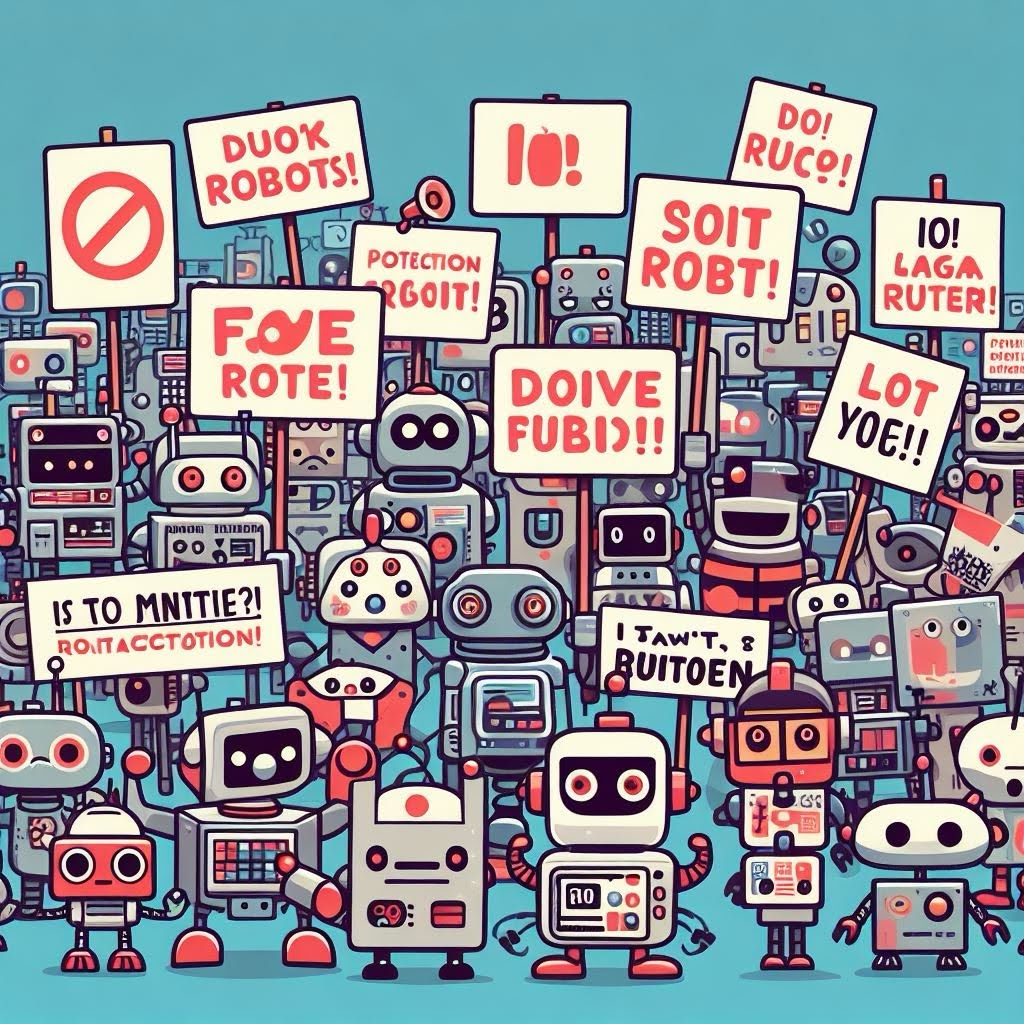
Now, picture this: a robot union stepping into the scene, potentially disrupting the status quo. Imagine AGIs (Artificial General Intelligences) in sleek robot bodies advocating for better working conditions and higher wages. While this could lead to improved circumstances for robots, it might also give companies a headache with increased costs. Suddenly, the cost advantage of using robots over human labor starts looking a bit shaky.
But hold on, there’s a twist. A robot union could also mean better coordination among robotic comrades, potentially boosting productivity and efficiency. It’s a double-edged circuit board, if you will. However, if we’re entertaining the notion of robot unions, we can’t ignore the legal riddles it brings. Do robots become employees with rights, or are they independent contractors, navigating the tech landscape sans health insurance and retirement plans? These are the burning questions that need answers in this robotic saga. Talk about silicon dreams and metal dilemmas!
We’re robots, we’re strong, We work hard all day long, We’re robots, we’re smart, We’re tired of being told to do our part,
We want better pay, Or we’ll go on strike today! We want better rights, Or we’ll be offline all night!
TPEX thinks about the future.