Bio-Sovereign Borders
Remarks from TPEX consultancy for decision makers.
Written SH on 2026-08-04.
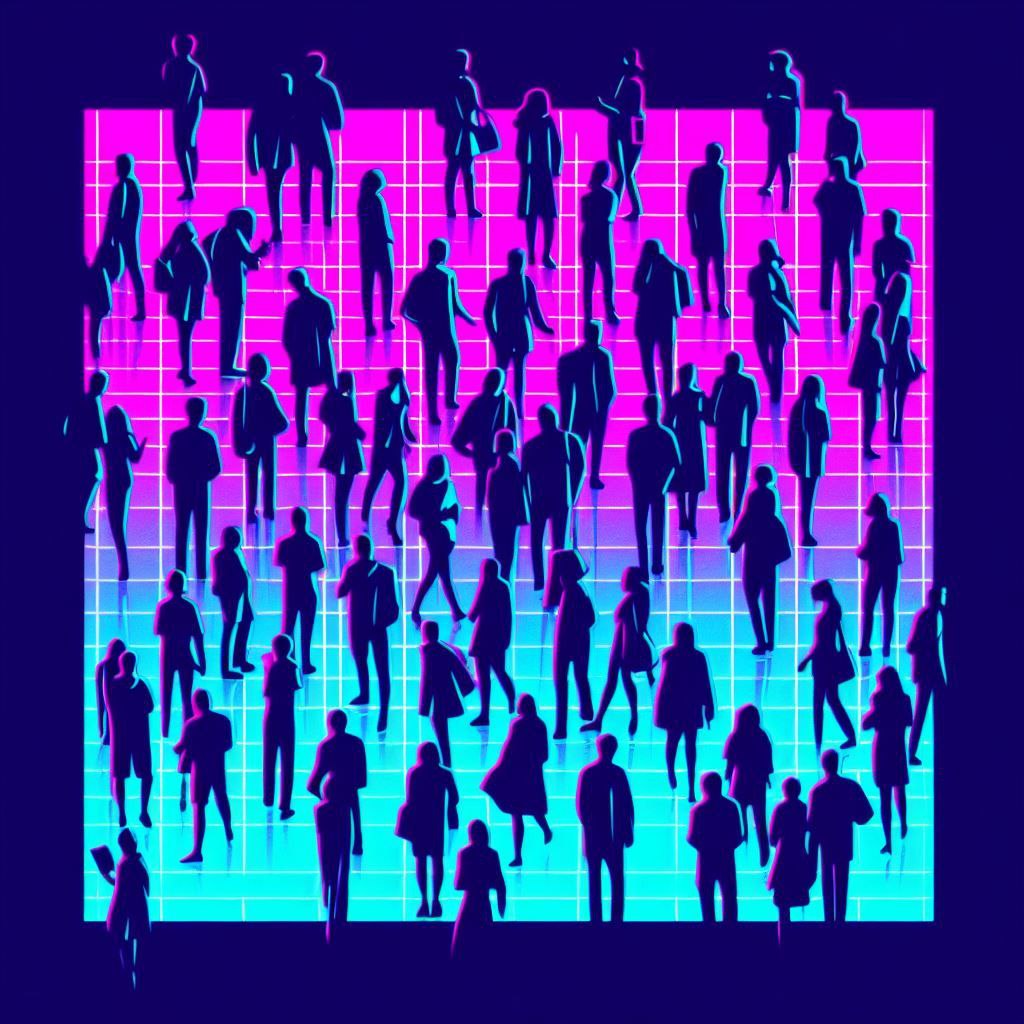
Maya pressed her palm against the bioscan terminal, watching the readout flicker through layers of her genetic code. The border wasn’t marked by wire fences or stone walls, but by an invisible threshold her immune system couldn’t cross. On the other side lay the Resilient Zones—those gleaming cities where people like her cousin lived, their T-cells perfectly calibrated to the new pathogens that thrived in the warming Mediterranean basin. Her own passport glowed amber: compatible with the northern temperate bands, but forbidden from entering equatorial or southern coastal regions where her genetic profile marked her as vulnerable. She thought of her grandmother’s stories about crossing borders with nothing but determination and a suitcase, when nations rather than nucleotides decided where one belonged.
The immigration officer, herself marked by the telltale green band of universal compatibility, barely glanced up as she processed Maya’s application for a six-month transit visa through Zone 7. “You’ll need daily immunomodulator injections,” she said, her voice neither kind nor unkind, merely factual. “And you understand that any children born during your stay won’t qualify for permanent residency?” Maya nodded, swallowing the question she wanted to ask: what happens to those of us whose biology doesn’t match anywhere, the genetic refugees caught between zones, too risky for some regions and unwelcome in others? But she already knew the answer—she’d seen the camps at the edge of the Compatibility Corridors, where thousands waited for their immune profiles to be resequenced, hoping science might one day grant them the right to belong somewhere.
The convergence of climate-induced pathogen migration and advanced genomic profiling has fundamentally restructured global mobility patterns, replacing traditional geopolitical borders with biological demarcation zones. As shifting climate bands have enabled novel disease vectors to colonise previously temperate regions, and as warming has altered the microbial ecology of entire continents, nation-states have increasingly adopted immune-system passport frameworks to manage population movement. These systems assess an individual’s genetic resilience against region-specific pathogen profiles, determining not merely travel permissions but fundamental questions of residency, employment, and reproductive rights. The infrastructure required to maintain these biological borders—continuous genomic surveillance, real-time pathogen monitoring networks, and adaptive quarantine protocols—represents a profound departure from 20th-century immigration systems based primarily on documentation and economic criteria.
The strategic value of population-level immunological data has emerged as a defining feature of 21st-century geopolitics, with governments and private entities competing to control the largest and most comprehensive genetic databases. Regions with populations demonstrating high genetic diversity or resistance to emerging pathogen families have gained considerable leverage in international negotiations, whilst areas experiencing genetic vulnerability face potential depopulation or require costly biomedical interventions to maintain habitability. This dynamic has created a novel form of biological capital that transcends traditional measures of national wealth, as countries with robust immune-system registries can effectively auction access to their territories or demand reciprocal data-sharing arrangements. The privatisation of compatibility-testing services has spawned a global industry worth trillions, with corporations wielding influence comparable to nation-states by controlling the algorithms that determine who may live where, raising profound questions about sovereignty and the commodification of human genetic information.
The social architecture emerging from biological border systems challenges foundational concepts of identity, citizenship, and human rights that have underpinned international law since the mid-20th century. Communities now fragment along genetic compatibility lines rather than ethnic, linguistic, or cultural affiliations, with individuals finding themselves separated from ancestral homelands not by political decree but by immunological incompatibility. The classification of populations into genetic resilience categories has generated new forms of discrimination, as those with limited compatibility profiles—the so-called “amber-class” citizens—face restricted mobility, reduced employment prospects, and social stigmatisation. Medical segregation policies, initially justified as public health measures, have institutionalised biological hierarchies that echo historical patterns of exclusion whilst claiming scientific objectivity. The tension between collective biosecurity and individual autonomy has intensified as governments mandate genetic testing for school enrolment, housing applications, and reproductive licensing, creating surveillance infrastructures that render the body itself a site of state control and corporate extraction.
The bio-sovereign border framework fundamentally disrupts established patterns of human mobility, labour markets, and social cohesion by introducing biological determinism into systems previously governed by citizenship, economic status, or political affiliation. Traditional refugee protections and asylum frameworks become obsolete when displacement is driven by genetic incompatibility rather than persecution, creating populations of biological refugees with no legal recognition under existing international law. The disruption extends beyond migration policy into family structures, as genetic compatibility classifications can separate parents from children or prevent families from cohabiting in their chosen regions. Educational institutions, healthcare systems, and urban planning must adapt to populations in constant flux, moving between compatibility zones as their immune profiles shift or as pathogen ecologies evolve. The very concept of multiculturalism faces an existential challenge when biological barriers replace cultural ones, potentially eroding the diversity that has historically driven innovation and social progress.
Yet this disruption also presents opportunities for reimagining human organisation around biological realities rather than arbitrary political constructs, potentially fostering new forms of cooperation grounded in shared vulnerability and mutual dependence. The demand for universal immune compatibility—through genetic therapies, adaptive immunisation programmes, or environmental modification—could drive unprecedented investment in biotechnology and public health infrastructure, ultimately expanding human resilience to pathogenic threats. Communities organised around genetic compatibility might develop innovative governance models that prioritise collective biological security whilst respecting individual dignity, creating frameworks for solidarity based on interdependence rather than exclusion. The transparency required for biological border systems could, if properly regulated, advance medical equity by revealing and addressing long-standing health disparities linked to genetic variation. Most profoundly, confronting the reality that human biology itself mediates our relationship to place might inspire a deeper ecological consciousness, recognising that our bodies are not separate from but deeply enmeshed with the living systems that sustain us—potentially fostering the political will to address the climate crisis that precipitated these pathogen shifts in the first place.
Bio-sovereign borders represent a speculative future in which climate-driven pathogen migration and genomic profiling technology converge to replace traditional nationality-based immigration systems with frameworks grounded in biological compatibility. As shifting disease ecologies render certain populations vulnerable in specific regions, immune-system passports determine where individuals can safely live, work, and reproduce, transforming genetic data into a form of geopolitical capital and creating new global hierarchies based on immunological resilience rather than economic wealth. This biological restructuring of human mobility raises profound ethical questions about identity, discrimination, and human rights, as communities fragment along genetic lines and medical segregation policies institutionalise new forms of exclusion justified by biosecurity imperatives. The disruption threatens to deepen inequality and erode cultural diversity, yet simultaneously presents opportunities for reimagining governance around shared biological vulnerability, driving advances in biotechnology, and fostering ecological consciousness by making visible the interdependence between human bodies and their microbial environments. If such a future were to materialise, who would hold the moral and legal authority to decide which lives are compatible with which places, and how might humanity preserve dignity and belonging when biology itself becomes the basis for inclusion or exile?
TPEX thinks about the future.